Mexico’s urban sprawl is steadily reshaping life in its biggest cities
A new study has found that 69 Mexican metropolitan areas nearly doubled their urban populations from 1990 to 2020, but much of that growth occurred farther from the heart of downtown, leaving their central areas with 2.5 million fewer residents.
The study, published July 25 by researchers at Tecnológico de Monterrey’s Center for the Future of Cities (CFC) and the Complexity Science Hub in Vienna, Austria, examined census data from 1990, 2000, 2010 and 2020.
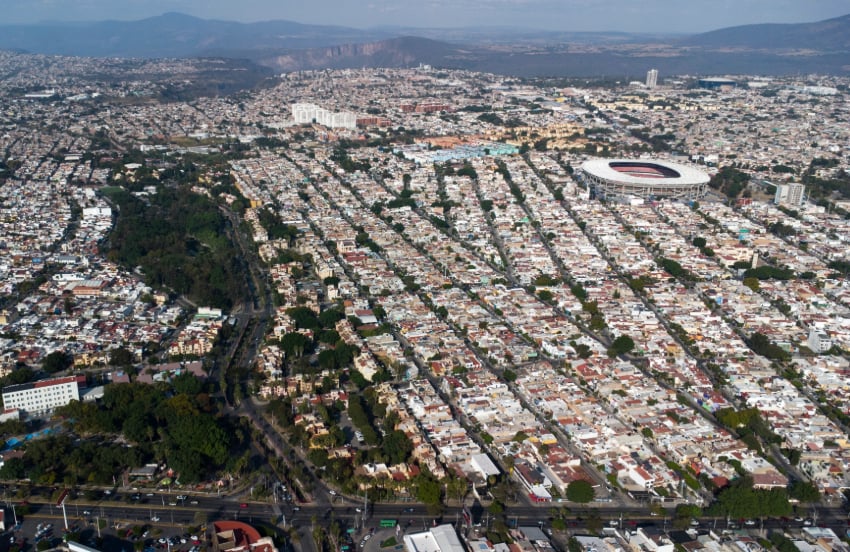
It found that population distribution shifted steadily toward intermediate, distant and peripheral areas.
More than 40% of residents in the metro areas studied lived in central areas in 1990. By 2020, that share had fallen to 22%, according to the research.
Researchers said limited affordable housing in established urban areas — where land and construction costs are higher — helped push growth outward. Cheaper peripheral land and housing policies that favored development outside consolidated areas also contributed to the shift.
Researchers also cited rising car ownership and transportation planning that lagged behind new development as factors that reinforced the pattern.
As a result, a larger share of residents lived farther from jobs, schools, health care and other services — with increased travel times and distances needed to get to those locations from their homes.

In Mexico City, the population of areas nearest the historic center fell by about 166,000 residents during the period, even as the broader metropolitan area grew.
Monterrey’s population within 5 kilometers of its center fell from about 485,000 in 1990 to 377,000 in 2020, while Guadalajara lost more than 200,000 residents in the same radius.
Researchers estimated that the average distance between where residents lived and their city’s center increased 28% as populations moved outward.
The study does not establish whether outward moves were voluntary or involuntary, nor does it identify the income or job location of individual households that moved. It also does not establish gentrification, rent increases or replacement by wealthier residents as a factor in the departures.
Its authors instead focused on documenting the shift.
Alberto Meouchi, head of the Mexico City office of Tec de Monterrey’s CFC, told Wired en Español that a return of all residents to traditional city centers was unrealistic.
He said cities could instead develop multiple centers that bring housing, jobs, services and transportation closer together.
With reports from TecScience, Animal Político, La Silla Rota and Wired
The post Mexico’s urban sprawl is steadily reshaping life in its biggest cities appeared first on Mexico News Daily


Comments
Post a Comment